
MyMixtapez: Playlists 24/7
My Mixtapez: Rap & Hip HopMusic & Audio
4.298.78K Reviews
- Version
- 8.7.8
- Installs
- 10.00M
- Age Rating
- Teen
Screenshots
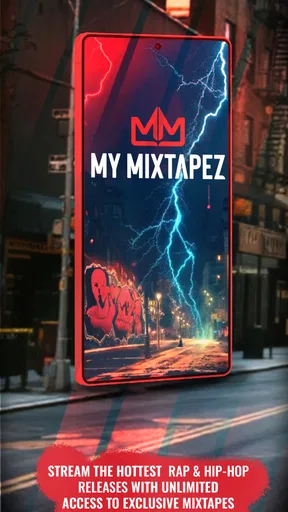
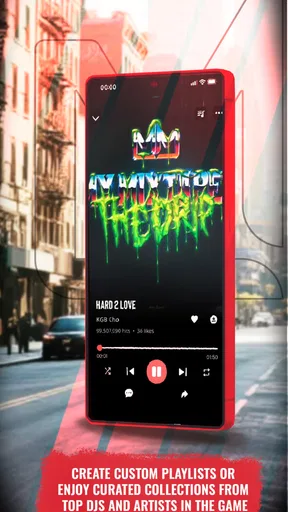
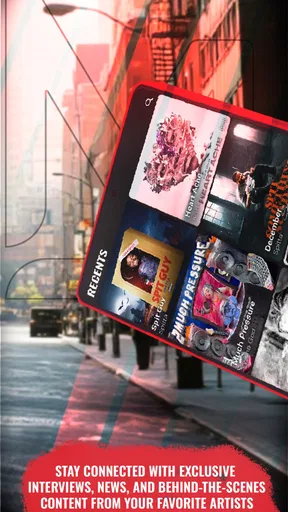
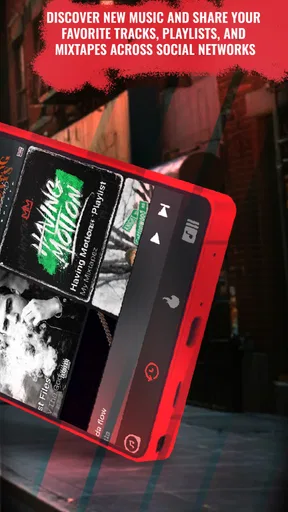
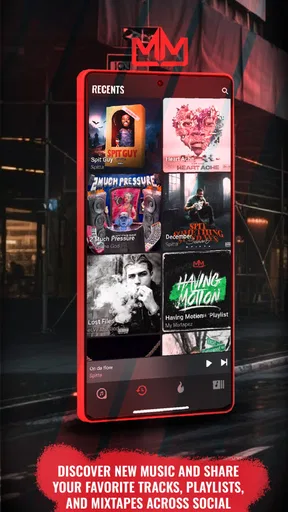

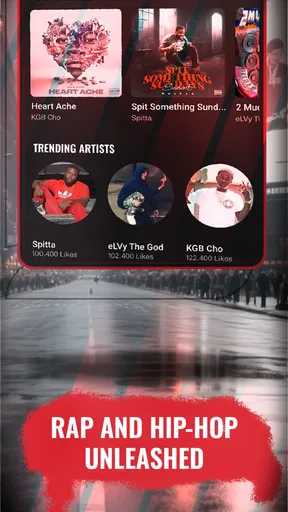
Our Review of MyMixtapez: Playlists 24/7
 Analysis by Appyee
I came away from MyMixtapez: Playlists 24/7 with a fairly clear impression: it is most useful when I want a quick route into rap and hip-hop culture, not when I am looking for a universal music player. The app has a focused identity, and that focus is its main advantage. Instead of asking me to build a listening habit from a completely open catalog, it puts playlists and mixtape-style discovery at the center.
That makes it easy to recommend to someone who already knows they want rap, hip-hop, and related sounds. I can open it with a mood in mind, browse without much planning, and let the app lead me toward something new. At the same time, anyone expecting the broad artist coverage, polished library tools, or highly predictable recommendations of a mainstream streaming service should approach it with different expectations.
MyMixtapez is a free Music & Audio app from My Mixtapez: Rap & Hip Hop. It is aimed at Teen users, and its long presence on mobile is reflected in its original release on July 17, 2013. The current version is 8.7.8, and it works on devices running Android 7.0 or later. Those details matter because this is not a brand-new experiment; it is an established, genre-specific listening option with a substantial audience.
Why its focused mixtape approach works
The strongest part of the experience is the way it encourages discovery through collections rather than through a single search box. When I use a general music service, I often end up returning to the same saved artists because the amount of choice becomes a barrier. Here, the rap and hip-hop focus narrows the starting point. That can feel refreshing, especially when I want background music for a drive, a workout, or a casual evening without spending ten minutes deciding what to play.
The app’s store summary points toward top playlists every day, and that idea describes the practical appeal better than a long feature list would. The useful question is not simply whether I can find a particular track. It is whether I can open the app and quickly find a sequence of music that fits the moment. For that purpose, playlist-led browsing is more efficient than manually assembling a queue every time.
I also like the cultural context of a mixtape-oriented service. Rap listening is often about following a scene, noticing emerging names, and moving between familiar sounds and less obvious releases. A tightly focused app can make that process feel more natural than a broad service where hip-hop is just one shelf among many. The experience rewards curiosity: I may begin with a recognizable style and end up exploring a different regional sound or a less familiar artist.
Its audience size supports the idea that this niche has real staying power. The app has passed 10 million installs and holds a 4.2 average rating from roughly 331 thousand ratings. I do not treat those figures as proof that every listener will enjoy it, but they do suggest that the concept has connected with a large number of people over time.
One practical strength is that the app is free to start using. That lowers the risk for someone who simply wants to test its approach without committing to another subscription. The presence of in-app purchases, priced from $0.99 to $29.99 per item, means I would still pay attention to any purchase prompt and check exactly what it offers before confirming. The free entry point is attractive, but “free” should not be confused with every part of the experience being without optional costs.
A useful routine for everyday listening
My favorite way to use an app like this is to give it a specific job instead of expecting it to replace every audio service on my phone. For example, before leaving for work, I can open it and choose a playlist that matches the energy I want. During a longer drive, I can switch to a different collection rather than repeatedly searching for individual songs. In that scenario, the app earns its place because it reduces decisions and keeps the listening session centered on one genre.
There is also a good use case for listeners who are tired of algorithmic recommendations that keep circling the same major artists. A playlist-based rap app can act as a separate discovery lane. I would use it alongside my regular service: one app for albums and carefully managed personal playlists, and this one for browsing the wider mixtape atmosphere. That division is more realistic than treating it as a complete replacement.
A small but important tip is to browse with a purpose. If I open the app while expecting it to understand a very precise emotional request, the experience may feel less satisfying than a service built around detailed personalization. I get better results when I decide whether I want energetic, relaxed, current-feeling, or exploratory listening, then give myself permission to try a few collections. The app is strongest as a discovery tool, not as a perfectly controlled jukebox.
Another useful workflow is to separate discovery from commitment. When I encounter an unfamiliar artist or style, I do not immediately assume it belongs in my permanent library. I listen for a while, note what stands out, and later look for the artist elsewhere if I want deeper album coverage. This avoids one of the common frustrations of niche apps: finding something exciting but not having every surrounding release organized exactly as I prefer.
Where the focused design becomes limiting
The same specialization that makes MyMixtapez appealing can also make it feel narrow. If my listening changes throughout the day from rap to rock, electronic music, podcasts, classical recordings, and spoken audio, I would rather use a broader platform as my main destination. This app makes sense as a dedicated genre companion, but it is less convincing as the only audio app I own.
I would also be cautious if I care deeply about library management. People who organize music by albums, release years, custom tags, carefully edited queues, or extensive offline routines may prefer a more mature all-purpose service. A playlist-first experience is convenient for immediate listening, but it does not automatically satisfy someone who wants to manage a personal collection with precision.
Discovery can bring another trade-off. A broad catalog gives me more control over exactly which recording I hear, while a curated or playlist-centered environment asks me to accept the direction of the collection. That can be enjoyable when I want surprises, but frustrating when I have a very specific version, sequence, or artist in mind. I would not choose this app for a carefully planned listening session built around one exact discography.
There is also a practical attention cost. Because the app is designed around browsing, I may spend more time moving through options than I intended. That is not necessarily a design failure; discovery is part of the point. Still, if I am in a hurry and already know the precise track I want, a familiar search-driven player will probably get me there faster.
The Teen content rating is another reason I would think about the intended audience before handing over the phone to a younger listener. Rap and hip-hop can include mature themes, language, and subject matter, so parents should make their own judgment rather than assuming that a Teen label makes every selection suitable for every situation. For adult listeners and teens whose families are comfortable with the genre, the rating provides useful context without replacing personal supervision.
How it compares with ordinary streaming alternatives
Compared with a mainstream music service, MyMixtapez feels more like a specialist doorway than a complete music ecosystem. The usual alternatives are generally better when I need broad genre coverage, album ownership within one library, polished cross-device organization, or highly specific search. They are also more natural choices for households where several people listen to very different kinds of audio.
Where this app can win is speed of genre discovery. A general service may offer more total music, but that abundance can make rap-focused browsing feel scattered. Here, the identity is immediately clear. I do not have to build the entire context myself before discovering something relevant. For a listener who mainly wants rap and hip-hop, that focus may matter more than having the largest possible catalog.
It also differs from a simple local music player. A local player is excellent for files I already own and want to organize privately, but it cannot provide the same kind of discovery path. MyMixtapez is better when I want to encounter new playlists and mixtape-style listening; a local player is better when I already know exactly what I have and want dependable control over it.
Against radio-style apps, the distinction is subtler. Radio is convenient when I want continuous playback with minimal interaction, while playlist browsing gives me more say over the direction of a session. I would choose radio for hands-off listening and this app when I want to explore collections deliberately. Neither approach is universally better; they serve different moods.
Who should install it, and who should pass
I think the best audience is a rap or hip-hop listener who enjoys finding music through themed collections rather than managing a meticulously structured library. It is particularly suitable for someone who wants a free starting point, likes to browse, and is comfortable keeping a specialist app beside a broader streaming service.
It may also suit listeners who want a separate space for genre exploration. Keeping discovery in one app and personal favorites in another can be surprisingly effective. I can experiment without cluttering my main library, then decide later which artists or tracks deserve a permanent place. That is a more useful role for the app than expecting it to handle every listening need.
I would skip it as a primary choice if I mainly listen outside rap and hip-hop, need a single carefully organized music collection, or expect every search to lead directly to a precise album or track. I would also look elsewhere if optional purchases make me uncomfortable or if I prefer an experience built around one consistent subscription and library system.
Before installing, I would check the Android requirement on an older device and make sure the Teen rating fits the intended listener. On a compatible phone, the low barrier of a free app makes testing straightforward. I would spend a few sessions exploring different playlists rather than judging it after opening one collection, because its value depends on whether its selection matches my taste.
My final take after using it
MyMixtapez: Playlists 24/7 is a focused recommendation for listeners who want rap and hip-hop discovery without starting from a blank page. Its biggest strength is not that it tries to do everything; it is that it gives one musical world a clear home. The playlist-centered approach can make casual listening faster and more adventurous, especially when I want a mood or scene rather than one exact song.
Its limitations are equally clear. It is not the obvious choice for a mixed-genre household, a collector who wants detailed library control, or anyone who expects a broad service to handle music, podcasts, and every other audio habit in one place. The optional purchase range also deserves attention, and the Teen rating should be treated as useful guidance rather than a substitute for parental judgment.
My recommendation is therefore specific: install it if your listening is strongly rooted in rap and hip-hop and you enjoy discovering music through playlists and mixtapes. Use it as a companion to a general service if you need broader coverage or deeper organization. The app is at its best when it serves as a dedicated discovery room, not when it is forced to become your entire music library.
With that expectation, the free entry point is worthwhile, the genre focus feels purposeful, and the app’s established audience makes it an easy one to try. I would not promise that every playlist will match my taste, but I would recommend giving it a fair test to anyone who wants a more direct path into rap and hip-hop listening.
Verdict
Strengths of MyMixtapez: Playlists 24/7
- Large catalog of hip-hop and mixtape-focused music
- Personalized playlists make discovering new artists easier
- Simple interface with quick access to saved tracks
- Regularly updated content keeps the library feeling fresh
- Supports background playback for listening while multitasking
Limitations of MyMixtapez: Playlists 24/7
- Ad interruptions can make free listening feel disruptive
- Some mixtapes may be unavailable in certain regions
- Audio quality and track availability can vary by upload
- Offline listening may require a premium subscription
- The niche music selection may not suit every listener
Similar Picks in This Category
View All
YouTube Music
Google LLC4.4

Samsung Music
Samsung Electronics Co., Ltd.3.8

Spotify: Music and Podcasts
Spotify AB4.3

JioSaavn - Music & Podcasts
Saavn Media Limited4.3

Lark Player:Music Player & MP3
Lark Player Studio - Music, MP3 & Video Player4.6

StarMaker: Sing Karaoke Songs
SKYWORK AI PTE. LTD.4.3
Frequently Asked Questions
What is MyMixtapez: Playlists 24/7?
MyMixtapez: Playlists 24/7 is a music and mixtape streaming app focused primarily on hip-hop, rap, R&B, and related urban music. It gives listeners access to curated playlists, mixtapes, artist releases, and music discovery features in one place. The catalog, availability, and listening experience may vary depending on your region, device, and the content currently offered by the service.
Is MyMixtapez: Playlists 24/7 free to use?
The app can generally be downloaded and used without an upfront purchase, although some features or content may depend on the current version of the service. Users should expect advertising, optional in-app purchases, or premium-style limitations where applicable. Before downloading, check the Google Play Store or Apple App Store listing for the latest pricing information, subscription details, and any restrictions that may apply to free listeners.
Can I listen to music offline with MyMixtapez: Playlists 24/7?
Offline listening depends on the features enabled in the current app version and on the rights available for individual tracks or mixtapes. Some releases may be available only for online streaming, while others could offer a download or save option. It is best to review the playback controls and account requirements inside the app rather than assuming every playlist can be stored for offline use.
Does MyMixtapez: Playlists 24/7 work on both Android and iPhone?
MyMixtapez: Playlists 24/7 may be available for Android and iOS, but compatibility can change as developers update or discontinue versions. Your device must meet the operating-system requirements shown on its official store page. Availability can also differ by country, so users should search the appropriate Google Play or App Store listing and confirm the developer, recent update date, permissions, and supported devices before installing.
Is MyMixtapez: Playlists 24/7 safe and legal to download?
For a safer installation, download MyMixtapez: Playlists 24/7 only through an official app store or a verified developer source, and avoid modified APK files or unofficial download websites. As with any streaming app, review the permissions, privacy policy, advertising practices, and content licensing information. Music availability can vary because of copyright agreements, so certain mixtapes or tracks may be removed or unavailable in specific locations.
